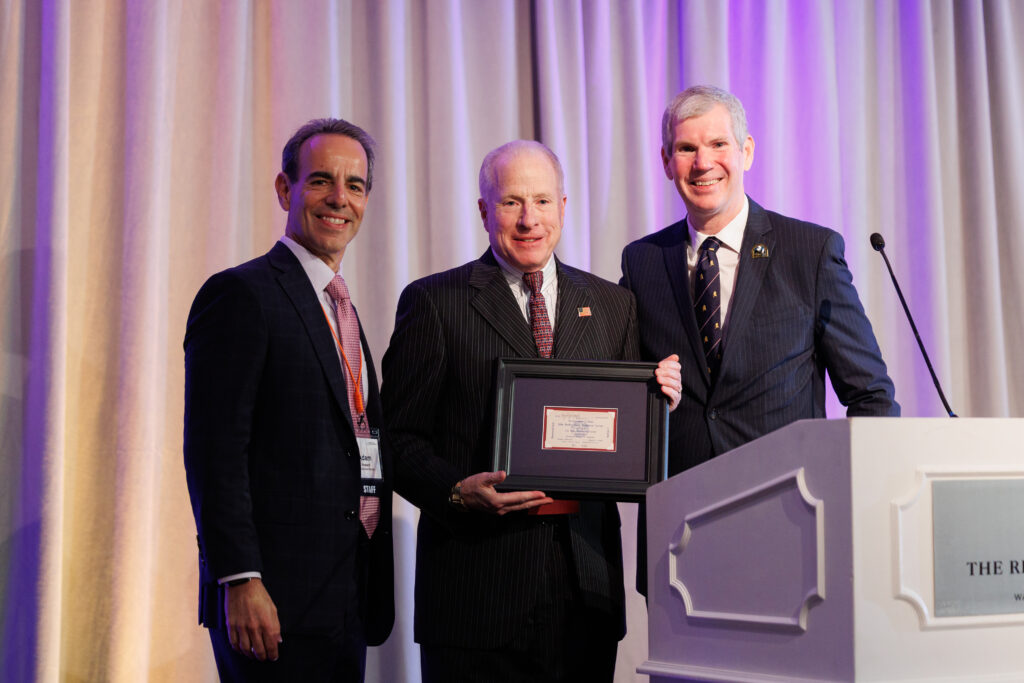
The Hottest Ticket in Town, 1946 By Donald P. Lofe, Jr. President and Chief Transformation Officer and Churchill Fellow, Westminster CollegeDirector, International Churchill Societ...
Churchill’s articles on the pleasures of painting appeared in the in 1921 and 1922, netting him the handsome sum of £1000 (considerably more than his paintings would earn him in his lifetime, of course). Clementine was cautious: ‘I expect the professionals would be vexed & say you do not yet know enough about Art’. Mary, his daughter, later wrote that Clementine was ‘in principle opposed to Winston’s writing what she regarded as “pot-boilers” to boost their domestic economy’. But Churchill, the professional writer (and now passionate painter), prevailed; his articles were a great success, explaining vividly why such pleasure was to be found in painting. Painting also provided consolation and peace in times of despair and grief.
Churchill spent much of his leisure time at Chartwell, the house and grounds he bought in 1922 set in the rolling countryside of Kent. When he wasn’t bricklaying, building tree houses for the children or feeding his menagerie of animals, he spent much of his time painting, particularly in his ‘wilderness years’. His studio at Chartwell is today much as it was when he was alive and many of his paintings can be seen on its walls. He generally preferred light and colour and, when the weather wouldn’t comply and he couldn’t paint out of doors, he often resorted to still-life studies of fruit, bottles and glassware (hence ‘Bottlescape’, his painting of a range of drinks and glasses, both full and empty.) His nephew Peregrine has said that Churchill, on receiving a large bottle of brandy for Christmas, sent his children round the house looking for other bottles to put alongside it, for a still life. Peregrine told Richard M. Langworth, the editor of , that Churchill said: ‘Fetch me associate and fraternal bottles to form a bodyguard to this majestic container’ ().
V H Mottram’s (1932) gives recipes to help families economise: For the “really poor”, ingredients include white and brown bread, suet white flour, rice, tapioca, sago, potatoes, dates, currants and figs. For the “merely poor”: butter, parsnips, raisins, milk, sweet biscuits, some pork and beef. Those on a ‘moderate income’ could turn to (1937), with twelve menus for breakfasts, luncheons and dinners for all four seasons. Recipes included salmon mayonnaise, roast fowl, asparagus with cream sauce, oysters , fillets of Beef a la St Aubyn, roast partridge and all kinds of fish – fresh, saltwater and shellfish.
Churchill rapidly established himself as a prominent New Liberal, combining a commitment to free trade with support for a programme of social reform and was one of the main architects of Britain’s incipient welfare state. To those Tories he’d ‘betrayed’ by ‘crossing the floor’, he was now betraying their class, too. By April 1908, however, his ‘star’ seemed to be shining clearer and clearer (see prophecy), as he achieved cabinet rank, as President of the Board of Trade in Herbert Asquith’s new government, at the age of only thirty three. In this role he introduced a number of initiatives (not all of which were adopted during his tenure but were later).
Churchill left Harrow School in 1892 and went to a ‘crammer’ to help him pass the entrance exam into the Royal Military College at Sandhurst, which he eventually did on the third attempt in 1893. He found life at Sandhurst much more suited to his temperament and talents than school life. Military topics such as tactics and fortifications were far more appealing to him than mathematics and he was a skilled horseman. The practical nature of the course appealed to him and he passed with credit in December 1894, twentieth out of a class of one hundred and thirty. In February 1985, Churchill joined the 4 (Queen’s Own) Hussars, a fashionable cavalry regiment, as a 2 Lieutenant, as a way of gaining some experience before working his way into politics. Churchill’s regiment, the 4th Queen’s Own Hussars, amalgamated with the 8th King’s Royal Irish Hussars in 1958 to form the Queen’s Royal Irish Hussars. After further cuts in 1993 the Queen’s Royal Irish Hussars amalgamated with the Queen’s Own Hussars (formerly the 3rd King’s Own Hussars and 7th Queen’s Hussars) to form the . As much as Churchill enjoyed soldiering, he regarded it as a means to an end – the making of a reputation that would allow him to enter the House of Commons – and he took every opportunity to make his mark on the world.
The First World War was to provide the first major setback to Churchill’s political career. In December 1914, at the age of forty, Churchill was eager not just to run the Navy but to manage the war itself. Demonstrating his usual self-confidence, drive and determination, Churchill looked for creative ways to engage the enemy, including an attack on the Dardanelles Straits. The high-risk offensive operation went ahead. It soon became clear that the planning of the operation was beyond the capabilities of the British leaders.
In 1905, Prime Minister Balfour resigned and Sir Henry Campbell-Bannerman formed a government pending a January election, appointing Churchill as Under-Secretary of State for the Colonies, assisting Lord Elgin. And in the Liberal Party’s landslide election victory in early 1906, Churchill was elected as the Liberal MP for North-West Manchester. Churchill, the ambitious, shining ‘glow-worm’, was on his way.
Churchill was appointed Home Secretary following the January 1910 election, when the Liberal party was again returned to power. It was during this time that he most clearly demonstrated that strange mix of his nature - of the radical reformer and the reactionary. While he helped introduce reforms to the prison system, reducing sentencing for younger people and improving conditions, he also opposed strikers and refused to support votes for women.
Churchill won his first 'seat' in Parliament in 1900, when he was elected by a small majority to become Conservative MP for Oldham, Lancashire. This was the beginning of a political career that would last over sixty years.
Get the Churchill Bulletin delivered to your inbox once a month.
Join the International Churchill Society today! Membership starts at just $29/year.