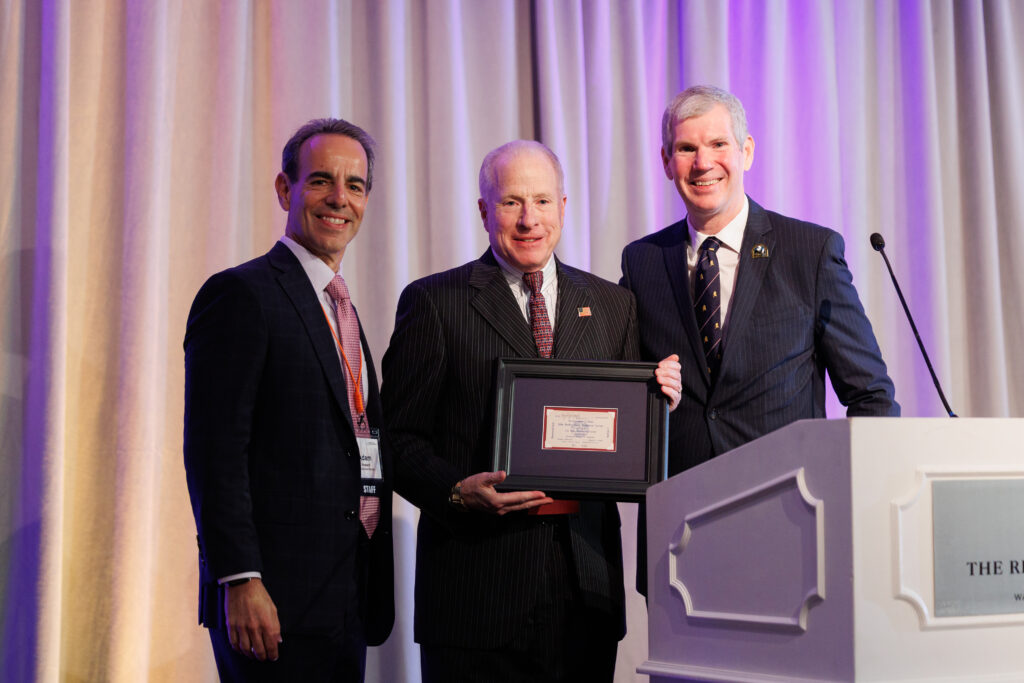
The Hottest Ticket in Town, 1946 By Donald P. Lofe, Jr. President and Chief Transformation Officer and Churchill Fellow, Westminster CollegeDirector, International Churchill Societ...
In 1921, Churchill was tasked with the complex process of managing the situation in the Middle East. Keen to limit the expense involved in the British occupation of the former Ottoman territories of Palestine and Mesopotamia (Iraq), he proposed that they should be run by a Middle East department of the Colonial Office. Set up in February 1921, its staff included T. E. Lawrence, ‘Lawrence of Arabia’.
In 1900, most Londoners ate their meals at home. Most working men returned home for their midday meal and those who didn’t ate plain British food in plain British ‘chophouses’. Wealthy men dined out at their clubs or, if they were very adventurous, at French restaurants. During the Second World War, restaurants were initially exempt from rationing; the wealthy were supplementing their rations by eating ‘luxury’ off-ration food. This was strongly resented by those unable to afford to eat out; new restrictions were introduced in May 1942 so that restaurants weren’t able to charge more than five shillings per customer and meals couldn’t be more than three courses (and only one of these could contain meat or fish or poultry). But even restaurants couldn't always offer escape from the monotony of potatoes, oats and cabbage: in 1944 Simpson's-in-the-Strand was serving Creamed Spam Casserole.
In October 1911, Churchill – still an ambitious relatively young minister – was appointed First Lord of the Admiralty with full charge of the Navy. Deteriorating relations between France and Germany and the rapid expansion of the German Navy had prompted great anxiety in Britain and Churchill was determined to ensure Britain’s maintenance of its naval supremacy over Germany. He felt that Britain should be in ‘constant and instant readiness for war’. Thanks to Churchill’s energy and persistence, the fleet was indeed ready when war came. In a peculiar twist of fate, when Churchill the anti-appeaser returned to office following his famous ‘wilderness years’ in September 1939, it was to be as First Lord of the Admiralty again (and he would be Prime Minister within eight months, fighting another war).
In 1917, when Germany began sinking ships that were bringing food (and military equipment) to Britain, and the country had just six weeks' food left, the Government initiated the rationing of food supplies. Even after the end of the war, sugar and butter remained rationed until 1920. Bread was subsidized but in 1917, British people were told to eat twenty five per cent less. Even the fighting troops had their food rationed. Compare . The US faced similar issues during the First World War. The country was in a severe economic depression, with many living in poverty, and .
At the start of the twentieth century, there was great variety in the types of food that was available to the rich and the poor. Malnutrition was common amongst poorer families, while elaborate dining was commonplace for the wealthy. This all changed after First World War and, by the Second World War, the food that we ate had changed forever.
Churchill sought and accepted constructive criticism – in the art of painting, at least – and enjoyed experimenting with new media and techniques. Sir John Lavery and his wife Hazel were not the only influences on Churchill’s painting style. During the 1920s, when he was Chancellor of the Exchequer, Churchill took advice on painting from Walter Sickert, who passed on his enthusiasm for Degas, Corot and Constable. As well as scrutinising the works of these painters, Churchill also carefully studied and absorbed the work of others; J. M. W. Turner, Camille Pissarro (whom Clementine had met in Paris), Paul Maze (the Anglo-French painter whom the Churchills called ‘Cher Maître’), John Singer Sargent (who had painted his mother’s portrait), the sea painter Julius Olsson and William Nicholson. Many of them visited Chartwell, where he did much of his ‘daubing’, and Paul Maze accompanied him on many of his painting trips.
Paintings by Churchill are still being discovered. In 2012, a previously unknown oil entitled ‘Still Life with Orchids’ materialised, having been in the Sandys family ever since Churchill presented it to Margot Sandys, the young wife of his daughter’s father-in-law. It was put up for sale with an . Churchill’s paintings were reproduced during his lifetime in various publications and many of these originals have yet to be traced (these include those that accompanied his articles in the in 1921, 1922 and 1946, in the of 1954 and, most surprisingly perhaps, those that illustrated the catalogue of his Royal Academy Exhibition in 1959). And the whereabouts of those six paintings apparently sold in Paris following his first exhibition, at the Galerie Druet in Paris in 1921, remain unknown. After the Second World War, Churchill gave two paintings of the Pyramids near Cairo to Field Marshal Jan Smuts; the painting here remained with his family in South Africa but the other was stolen and has never been traced.
In the winter of 1935, on the recommendation of Sir John Lavery and other artist friends, Churchill travelled to Morocco for the first time for a painting holiday. He was inspired by the light and colours. He referred to the pink Atlas mountains as ‘paintaceous’ and painted some of his most refined watercolours – and one particularly skilled oil painting – here. He was entranced by the exotic, desert landscape and the colours – the pinks, whites and ochres contrasting with the brilliant blue of the desert sky. He gathered a large number of photographs on this and subsequent visits which still remain in the Studio archives at Chartwell.
In 1915, during the First World War, Churchill helped orchestrate the disastrous Dardanelles naval campaign and the related military landings on Gallipoli, both of which saw enormous losses of life. As a result, Churchill found himself publicly and politically discredited. He was demoted to the token post of Chancellor of the Duchy of Lancaster. It seemed his political career was at an end. Devastated and despairing, Churchill retreated to a rented house, Hoe Farm, near Godalming, Surrey, with Clementine and the children. One day in June, his sister-in-law, Gwendeline (or ‘Goonie’), was painting in the garden and, seeing Churchill’s interest, suggested he try it himself. She loaned him her young son’s paint-box. So began one of his life’s passions. Churchill took to painting, at the age of forty, with his customary gusto, seeing it as his salvation from despair – ‘the Muse of Painting came to my rescue’. He continued to paint for the next forty years.
Get the Churchill Bulletin delivered to your inbox once a month.
Join the International Churchill Society today! Membership starts at just $29/year.