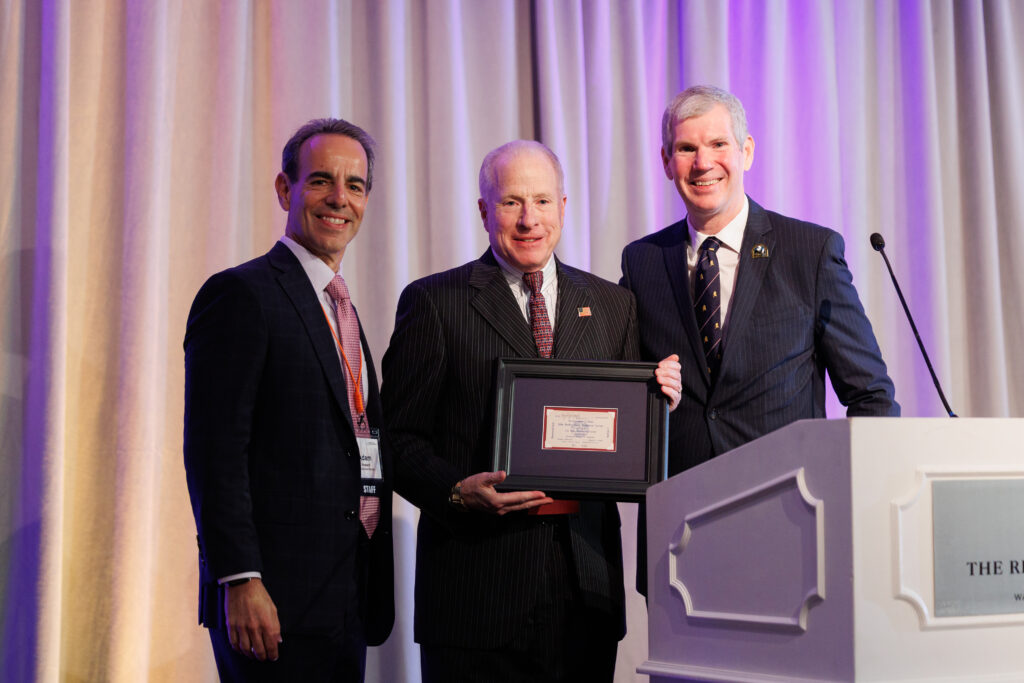
The Hottest Ticket in Town, 1946 By Donald P. Lofe, Jr. President and Chief Transformation Officer and Churchill Fellow, Westminster CollegeDirector, International Churchill Societ...
Only a few days after Churchill’s return from Yalta, British bombers attacked Dresden Between 13 and 15 February 1945, the RAF and US Army Air Forces launched a series of devastating raids...
In July 1945, Churchill attended his final act of the War; the first sessions of the Potsdam Conference – the last time he would meet Stalin – where...
This is the transcript of Churchill’s impromptu speech in the late afternoon of 8 May 1945 to the enormous crowds outside the Ministry of Health in Whitehall You can download the transcript...
This is the transcript of Churchill’s second impromptu speech to the crowds gathered in the London streets outside the Ministry of Health You can download the transcript here...
This is the transcript of Churchill’s broadcast to the nation, via the BBC, at 300 pm on 8 May 1945, from 10 Downing Street You can download the transcripts here...
Here you can see the notes for Churchill’s speech, which was broadcast on 8 May 1945...
Friday 8 May 2015 was the anniversary of VE Day (Victory in Europe Day), marking seventy years since the end of the Second World War in Europe The occasion was commemorated...
The celebrations begin Although no...
With the net tightening around Germany, the Allied Leaders regrouped to clarify their plans for the final offensive. Yalta, on the Black Sea coast of the Crimea, was deemed a safe venue for the second meeting of ‘The Big Three’. Stalin, Churchill and Roosevelt gathered on 4 February 1945 and agreed the plans for the final offensive, the occupation policy for Germany and the establishment of the United Nations and its Security Council. Stalin also agreed to enter the war against Japan, something for which Roosevelt was criticized. But in February 1945, the Japanese still seemed a formidable opponent and the the Soviet Union’s vast army might be needed to oppose them. Even more crucially, Roosevelt was criticised for ‘giving’ Eastern Europe to Stalin. However, there was little else he could do. The simple military fact in February 1945 was that the Soviet Union dominated Eastern Europe and that the power of the atomic bomb (that had yet to be tested) clearly couldn’t be relied on as a counter-measure to curb Stalin’s ambitions. Victory had been achieved at great cost – the lives of men, women and children; the destruction of homes and cities; the dislocation of peoples, exhaustion of finances and a weakened British economy. But Britain – led by Churchill, in his and Britain’s ‘finest hour’ – had achieved what it set out to do. Its people had dared and endured and seen victory, ‘in spite of terror’. They – and Churchill – had survived.
Get the Churchill Bulletin delivered to your inbox once a month.
Join the International Churchill Society today! Membership starts at just $29/year.