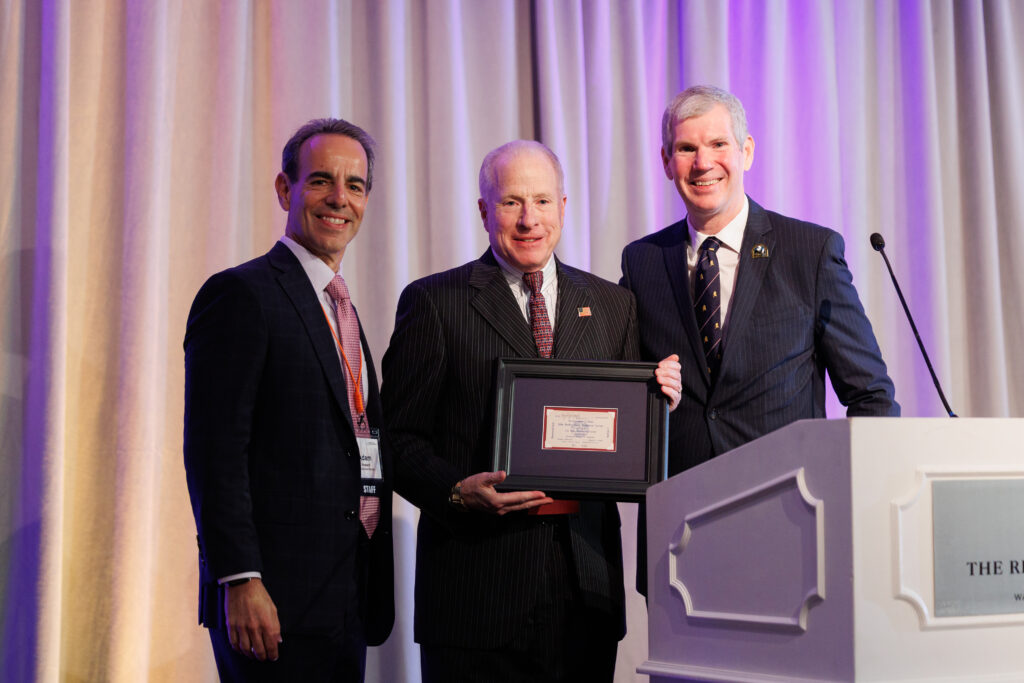
The Hottest Ticket in Town, 1946 By Donald P. Lofe, Jr. President and Chief Transformation Officer and Churchill Fellow, Westminster CollegeDirector, International Churchill Societ...
Returning to Britain from the US, Churchill found Ramsay MacDonald’s Labour government had issued a declaration, in October 1929, that British rule in India should aim to allow India ‘Dominion Status’. A firm believer that British rule was a guarantee of good government, Churchill’s found himself arguing against colleagues in his own party. Baldwin had endorsed the declaration and nearly everyone else within the party felt that India should be granted limited self-government and dominion status. Only a few ‘diehard’ Conservatives supported Churchill. He fought vehemently. Churchill argued strongly that only British rule could prevent racial and religious divisions within India resulting in bloodshed. But Churchill’s fighting talk didn’t win anyone over. When Gandhi and other Congress politicians were released from prison to attend discussions on constitutional reform, Churchill resigned in protest from the shadow cabinet in January 1931. Click to see some Punch cartoons of the time.
Churchill was not, however, entirely alone in his ‘wilderness’. As a privy councillor and an elder statesman, even without power, he wasn’t without some influence and retained contacts within the political arena, keeping his ‘finger on the pulse’. In 1934 he was drawn into deliberations about defence matters (principally about the problems of defending Britain from attack by air) and, from June 1935 until the outbreak of war in 1939, served on the Air Defence Committee, so was well informed about Britain’s ability to combat the German Luftwaffe. He was also kept informed by disaffected colleagues in the intelligence service, RAF and Foreign Office. Churchill held court at Chartwell, ‘a sort of alternative Cliveden; a regular meeting place for Churchill’s extensive circle of political associates and admirers, with an inner circle of particular friends at its core’ (Best, ). Guest included the three ‘Bs’ – Beaverbrook, Birkenhead (F. E. Smith) and Brendan Bracken – young conservative MPs who kept him in touch with what was going on within parliament. And of course the ‘Prof’ was also frequently at Chartwell. Professor Lindemann, the leading Oxford University scientist advised Churchill on aspects of air warfare in the 1930s and was a trusted source of information on technical matters. To learn more about Churchill’s political allies and advisers, read the (made publicly available to mark the anniversary of Churchill’s death).
Churchill didn’t enjoy being in opposition after 1945 and he didn’t attend the House of Commons very often, leaving the day-to-day party management to others . He didn’t seem particularly interested in economic issues, and the Conservatives came to seem increasingly out of step with the drive towards welfare and reconstruction. In the immediate aftermath of the Second World War, then, he ‘looked like a dinosaur at a light engineering exhibition’ (Aneurin Bevan, ‘History’s Impresario’). Vulnerable at home, unable to influence policy (and generally unwilling to), Churchill played to his strengths. He knew that he had the most to offer in his role as the great elder statesman who had ‘won the War’, and for the second time in his career, he turned his attentions abroad – and to the US.
In the general election of May 1929, the Conservatives under Baldwin lost their majority and went into opposition against a Labour government. Although Churchill was keen to develop an alliance between Liberals and Conservatives, his proposal was vetoed by some in the Shadow Cabinet. Finding himself out on a limb politically and increasingly frustrated by developments in Westminster, in August 1929 Churchill left Britain for a three-month tour of Canada and the United States, his first visit to the continent since 1901. He was to remain without a ministerial position for the next ten years.
With all his writing and journalism gaining the attention of the political authorities (due in no small part to promotion of his activities by his mother Lady Randolph), he resigned from the army in April 1899. Politics beckoned. He had already spoken at a few political meetings in the Autumn of 1898 and attempted to enter Parliament as a Conservative, but failed – by a small margin – at the by-election in Oldham in 1899. But more action was to beckon. A serious colonial war had begun in South Africa and Churchill managed to secure another lucrative assignment to report on the war for the . The contract he negotiated with the newspaper, a salary of £250 a month and all expenses paid, made him the highest-paid war correspondent of the day.
In 1951, Churchill finally avenged that devastating defeat of 1945 and was back in Downing Street. He was nearly seventy seven. During this second period as Prime Minister, what he later referred to as ‘several years of quiet steady administration’, Churchill devoted much of his energy to foreign affairs; to Cold War issues, strengthening Anglo-American relations (that ‘special relationship’) and to retaining Britain’s position as a global power. He didn’t do much in the way of domestic policy-making – stating once that the government’s priorities were ‘houses and meat and not being scuppered’ (John Colville, 22–23 March 1952). The world stage was a much more exciting one. The Korean War was in staggering on, there were problems in Iran under the revolutionary regime of Mussadiq, and there were ongoing arguments over the agreed withdrawal from the Suez base in Egypt. And the simmering tensions of the Cold War were ever-present. Churchill’s last great quest was, as Eisenhower later referred to it, ‘a long quest for peace’.
Churchill rapidly established himself as a prominent New Liberal, combining a commitment to free trade with support for a programme of social reform and was one of the main architects of Britain’s incipient welfare state. To those Tories he’d ‘betrayed’ by ‘crossing the floor’, he was now betraying their class, too. By April 1908, however, his ‘star’ seemed to be shining clearer and clearer (see prophecy), as he achieved cabinet rank, as President of the Board of Trade in Herbert Asquith’s new government, at the age of only thirty three. In this role he introduced a number of initiatives (not all of which were adopted during his tenure but were later).
In January 1950, a general election was called and this time Churchill took a more measured approach in his campaigning, avoiding those outright attacks on socialism he’d made in 1945. By a tiny margin (six seats), the Labour government won the election. Churchill carried on in opposition, calling for collaboration between Britain, the US and the Soviet Union (a new approach to diplomacy and the first mention of a ‘summit’ meeting). He also backed the government’s approach to the Korean War which broke out in 1950. Then, in October 1951, the Conservative Party won the general election (with a small majority), and Churchill returned as Prime Minister.
Following his blunder over India, Churchill’s judgement was again called into question in late 1936 and early 1937. The new king, Edward VIII, wanted to marry the American divorcée Mrs Wallis Simpson, a situation that prompted a constitutional crisis (kings weren’t allowed to marry divorced ‘commoners’; if the king went ahead, he’d have to ‘abdicate’, or step down as king).
Get the Churchill Bulletin delivered to your inbox once a month.
Join the International Churchill Society today! Membership starts at just $29/year.