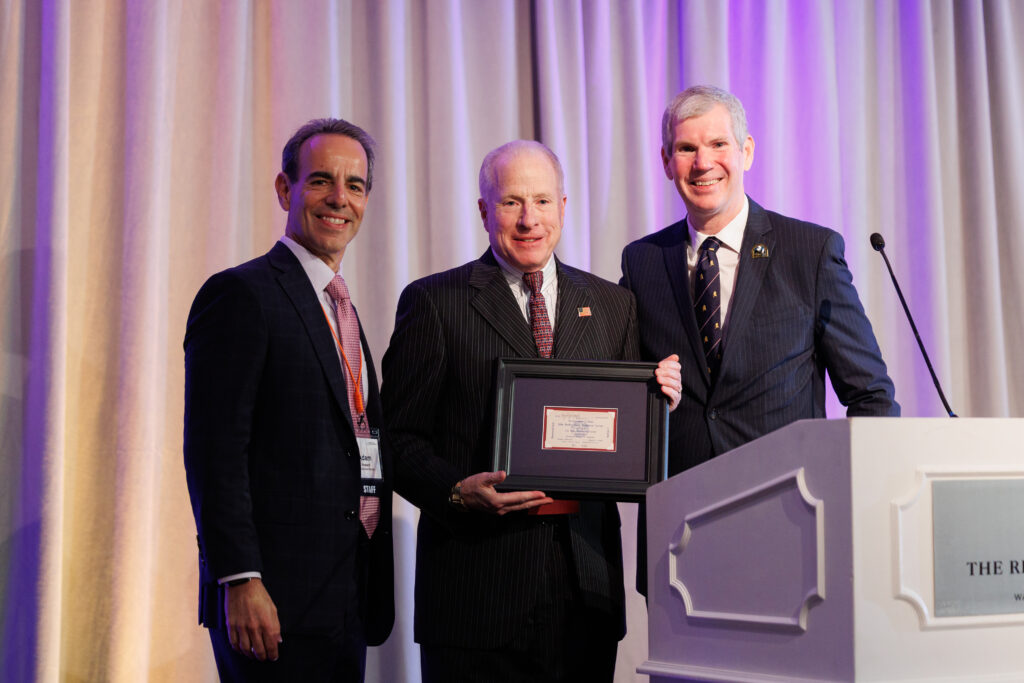
The Hottest Ticket in Town, 1946 By Donald P. Lofe, Jr. President and Chief Transformation Officer and Churchill Fellow, Westminster CollegeDirector, International Churchill Societ...
Much of the 1930s was devoted to travel and writing. Some of the former was for pleasure; Churchill had always relished travelling and enjoyed his time away from Britain. He spent many months on the continent – at expensive hotels, at the chateaux of friends and acquaintances, always with his easel and paints at hand Churchill used these long periods abroad, in the sunshine and among those who respected him, to recharge his batteries and restore his energy. His favourite holiday destination was the French Riviera, where he enjoyed the hospitality of wealthy American hostesses like Maxine Elliott and Consuelo Balsan, all of whom had genuine affection for Churchill and played host to him in their villas, providing him with much-needed relaxation. But Churchill could also earn money while travelling, too, supplementing the family’s meagre income by taking on paid lecture tours, writing books and popular newspaper articles (he had, after all, been one of the highest paid war correspondents in the world).
When Churchill returned to the Conservative party in 1924, Stanley Baldwin, keen to be associated with moderate social reform, promoted him to Chancellor of the Exchequer. Churchill’s period as Chancellor was one of the happiest and most settled phases of his career. He was almost at the top.
After Germany’s surrender in May 1945, Churchill wanted his wartime coalition government to continue until the defeat of Japan which wasn’t anticipated for another year at least. But Labour and the majority of the Liberals refused and pulled out of the coalition. Churchill headed a Conservative ‘caretaker’ government for a brief period until Parliament was dissolved and the first general election for ten years was held.
The Earl of Halifax, Foreign Secretary since 1938, turned the job of Prime Minister down. As Simon Schama says in his History of Britain BBC series, ‘Churchill had seen the face of battle; Halifax had only hunted foxes’. Churchill’s appointment was inevitable – and his time in the wilderness at an end. Just after six o’clock in the evening of 10 May, Churchill went to see King George VI at Buckingham Palace and became Prime Minister and Minister of Defence. ‘Winston’ was indeed ‘back’. Churchill owed his rehabilitation to no-one but himself – he had stood alone for years – and this made him seem all the more powerful and the man to lead Britain in ‘this hour’. It was to be his ‘finest hour’.
Churchill’s political isolation in these ‘wilderness’ years was largely self-inflicted. Churchill’s warnings about the dangers posed by the rise of Nazi Germany went largely ignored, principally because he’d unwisely backed causes – India, in the early 1930s and, later, supporting Edward VIII during the Abdication crisis in 1936 – that set him against his peers and public opinion and made him seem reactionary, unrealistic and out-of-touch. Later events would lead to him being seen in these ‘wilderness years’ in a different light. Read the full article, which appeared in . Churchill sent out very clear messages, as early as 1932, about the menace and deadly threat of Nazi Germany and the need to rearm. He gave his first speech warning of Germany’s rearmament on 13 May 1932 and he published an article in the , ‘Can we Defend ourselves?’ on 17 November of the same year. His warnings might have commanded more support had he not eroded his reputation with his interventions on India.
Those who had felt Churchill’s career had reached its limit when the Conservatives were defeated in 1929 now felt vindicated. Even some of his own party thought Churchill was out of date and out of touch. Rather than weakening Baldwin’s position (as leader), as some thought he’d intended, Churchill – by endeavouring to ‘marshal British opinion’ for a lost cause – in fact weakened his own position. When Baldwin and MacDonald joined forces to form a National Government in 1931, bringing together leading figures from the Conservative, Labour and Liberal parties, Churchill’s views on India meant he was excluded from office. With his standing and credibility seriously damaged, this ‘personal crusade without restraint or care for the consequences’ (Ball, ) meant his later warnings about the dangers of Nazism went largely unheeded. Finding himself increasingly isolated politically, with seemingly little influence, Churchill had time on his hands. He also needed a steady income. Chartwell was an expensive home to run – and he had four children and a wife to support, as well as his ever-lavish lifestyle . He turned his attentions, and prodigious energies, elsewhere.
It was in his role as a senior statesman with considerable international prestige that Churchill felt he could influence global relations. He wanted, above all, to establish constructive relations with Moscow through ‘summit’ conferences of world leaders. He felt that face-to-face meetings – at the ‘summit’ – would be the best way to try to secure world peace, and so coined the term and set out his agenda. However, the ‘three’ with whom he had built rapport during the Second World War were no longer alongside him; Roosevelt had died in 1945 and Stalin, in 1953. Churchill was the sole remaining leader of the ‘grand alliance’. But, feeling strongly that it was only by negotiation that the nuclear arms race could be halted and détente established, he tried to re-establish that ’special relationship’ with the US and encouraged Eisenhower, who’d been elected President in 1952, to consider meeting up with the new Soviet leader, Khrushchev.
In October 1911, Churchill – still an ambitious relatively young minister – was appointed First Lord of the Admiralty with full charge of the Navy. Deteriorating relations between France and Germany and the rapid expansion of the German Navy had prompted great anxiety in Britain and Churchill was determined to ensure Britain’s maintenance of its naval supremacy over Germany. He felt that Britain should be in ‘constant and instant readiness for war’. Thanks to Churchill’s energy and persistence, the fleet was indeed ready when war came. In a peculiar twist of fate, when Churchill the anti-appeaser returned to office following his famous ‘wilderness years’ in September 1939, it was to be as First Lord of the Admiralty again (and he would be Prime Minister within eight months, fighting another war).
Away from the field of battle, Churchill’s risk-taking continued unabated. By January 1910, he was Home Secretary (his exploits in the war zones of the British Empire having succeeded in getting him into ‘the game of politics’) – and managed to engineer himself into the centre of the action.
Get the Churchill Bulletin delivered to your inbox once a month.
Join the International Churchill Society today! Membership starts at just $29/year.