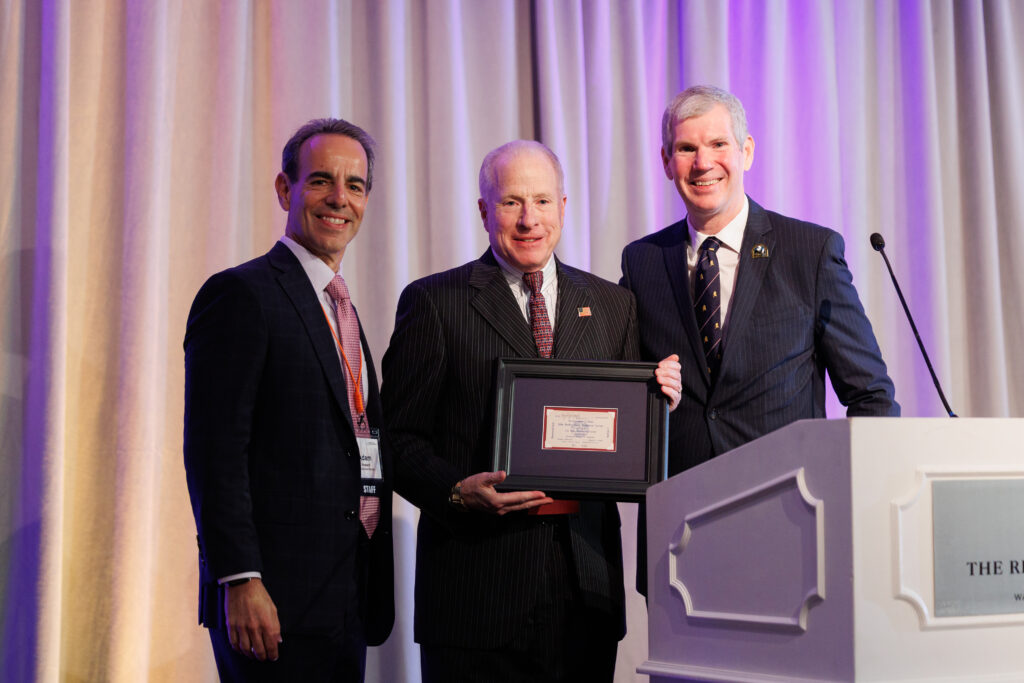
The Hottest Ticket in Town, 1946 By Donald P. Lofe, Jr. President and Chief Transformation Officer and Churchill Fellow, Westminster CollegeDirector, International Churchill Societ...
Churchill didn’t enjoy being in opposition after 1945 and he didn’t attend the House of Commons very often, leaving the day-to-day party management to others . He didn’t seem particularly interested in economic issues, and the Conservatives came to seem increasingly out of step with the drive towards welfare and reconstruction. In the immediate aftermath of the Second World War, then, he ‘looked like a dinosaur at a light engineering exhibition’ (Aneurin Bevan, ‘History’s Impresario’). Vulnerable at home, unable to influence policy (and generally unwilling to), Churchill played to his strengths. He knew that he had the most to offer in his role as the great elder statesman who had ‘won the War’, and for the second time in his career, he turned his attentions abroad – and to the US.
In the general election of May 1929, the Conservatives under Baldwin lost their majority and went into opposition against a Labour government. Although Churchill was keen to develop an alliance between Liberals and Conservatives, his proposal was vetoed by some in the Shadow Cabinet. Finding himself out on a limb politically and increasingly frustrated by developments in Westminster, in August 1929 Churchill left Britain for a three-month tour of Canada and the United States, his first visit to the continent since 1901. He was to remain without a ministerial position for the next ten years.
In 1951, Churchill finally avenged that devastating defeat of 1945 and was back in Downing Street. He was nearly seventy seven. During this second period as Prime Minister, what he later referred to as ‘several years of quiet steady administration’, Churchill devoted much of his energy to foreign affairs; to Cold War issues, strengthening Anglo-American relations (that ‘special relationship’) and to retaining Britain’s position as a global power. He didn’t do much in the way of domestic policy-making – stating once that the government’s priorities were ‘houses and meat and not being scuppered’ (John Colville, 22–23 March 1952). The world stage was a much more exciting one. The Korean War was in staggering on, there were problems in Iran under the revolutionary regime of Mussadiq, and there were ongoing arguments over the agreed withdrawal from the Suez base in Egypt. And the simmering tensions of the Cold War were ever-present. Churchill’s last great quest was, as Eisenhower later referred to it, ‘a long quest for peace’.
In January 1950, a general election was called and this time Churchill took a more measured approach in his campaigning, avoiding those outright attacks on socialism he’d made in 1945. By a tiny margin (six seats), the Labour government won the election. Churchill carried on in opposition, calling for collaboration between Britain, the US and the Soviet Union (a new approach to diplomacy and the first mention of a ‘summit’ meeting). He also backed the government’s approach to the Korean War which broke out in 1950. Then, in October 1951, the Conservative Party won the general election (with a small majority), and Churchill returned as Prime Minister.
Watch this fascinating recording of his 1950 Election Broadcast speech, including outtakes This clearly shows that his remarkable charisma and approach to speech-making and broadcasting (and his bad temper) were still...
Dr Warren Dockter (University of Cambridge) and Professor Richard Toye (University of Exeter) discuss Winston Churchill’s notorious ‘Gestapo Speech’ in the context of the 1945 General Election https://wwwyoutubecom/embed/lM54hRMxzCc?list=PLVRJoyIOeaRK4eDDCZ_GOgIAXWOcRtmf- copyright:...
Dr Warren Dockter (University of Cambridge) and Professor Richard Toye (University of Exeter) discuss the reasons for Churchill’s electoral defeat in the General Election of 1945 and the various historical interpretations...
Get the Churchill Bulletin delivered to your inbox once a month.
Join the International Churchill Society today! Membership starts at just $29/year.