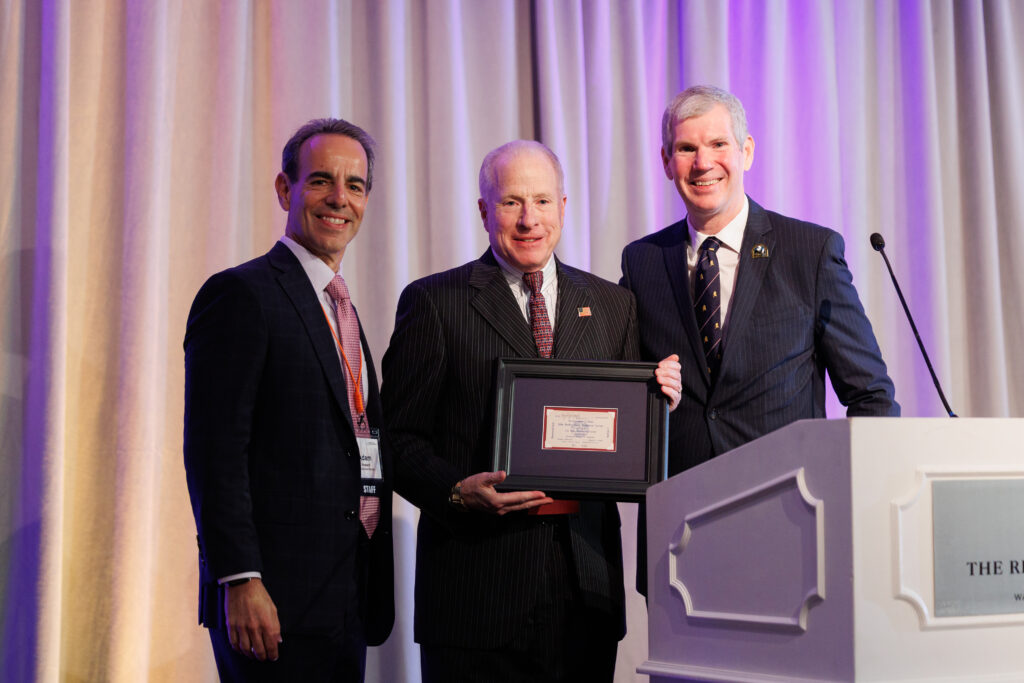
The Hottest Ticket in Town, 1946 By Donald P. Lofe, Jr. President and Chief Transformation Officer and Churchill Fellow, Westminster CollegeDirector, International Churchill Societ...
Humorous behind the scenes footage of Churchill in January 1950 preparing a newsreel for the upcoming British General Election https://wwwyoutubecom/watch?v=yYyq__nwrA4 In this election Churchill’s efforts came to naught as the Labour Party returned with...
A statue of Churchill was unveiled on 27 June 1955 https://wwwyoutubecom/watch?v=nukg9t4ynTg In 1955 the Lord Mayor of London unveiled a status of Sir Winston Churchill in the Guildhall in London Rarely is a...
Churchill resigns on the 4th of April 1955 https://wwwyoutubecom/watch?v=m_Uj_o1L-e0 Winston Churchill became Prime Minster for the first time during the Second World War and in 1950 he was asked by the King to form...
Finest Hour 171, Winter 2016 Page 46 Review by Mark Klobas Michael Jago, Clement Attlee: The Inevitable Prime Minister, Biteback, 2014, 400 pages, £25 ISBN 978-1849546836...
Finest Hour 171, Winter 2016 Page 47 Review by D R Thorpe Michael Jago, Rab Butler: The Best Prime Minister We Never Had? London: Biteback, 2015, £25, 464 pages ISBN 978-1849549202...
In the twinkling of an eye, I found myself without an office, without a seat, without a party, and without an appendix.
Although it seemed unlikely that Churchill, who had led Britain to victory, could lose, he didn’t help his cause His broadcasts seemed ill-judged and out of touch with the swing in...
After Germany’s surrender in May 1945, Churchill wanted his wartime coalition government to continue until the defeat of Japan which wasn’t anticipated for another year at least. But Labour and the majority of the Liberals refused and pulled out of the coalition. Churchill headed a Conservative ‘caretaker’ government for a brief period until Parliament was dissolved and the first general election for ten years was held.
Those who had felt Churchill’s career had reached its limit when the Conservatives were defeated in 1929 now felt vindicated. Even some of his own party thought Churchill was out of date and out of touch. Rather than weakening Baldwin’s position (as leader), as some thought he’d intended, Churchill – by endeavouring to ‘marshal British opinion’ for a lost cause – in fact weakened his own position. When Baldwin and MacDonald joined forces to form a National Government in 1931, bringing together leading figures from the Conservative, Labour and Liberal parties, Churchill’s views on India meant he was excluded from office. With his standing and credibility seriously damaged, this ‘personal crusade without restraint or care for the consequences’ (Ball, ) meant his later warnings about the dangers of Nazism went largely unheeded. Finding himself increasingly isolated politically, with seemingly little influence, Churchill had time on his hands. He also needed a steady income. Chartwell was an expensive home to run – and he had four children and a wife to support, as well as his ever-lavish lifestyle . He turned his attentions, and prodigious energies, elsewhere.
Get the Churchill Bulletin delivered to your inbox once a month.
Join the International Churchill Society today! Membership starts at just $29/year.