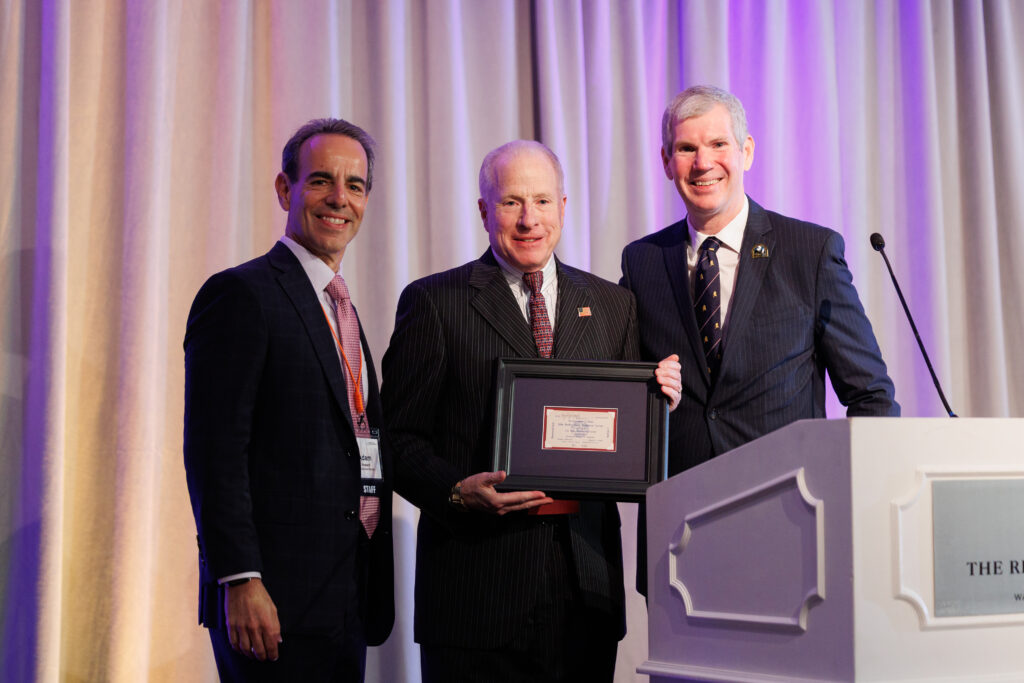
The Hottest Ticket in Town, 1946 By Donald P. Lofe, Jr. President and Chief Transformation Officer and Churchill Fellow, Westminster CollegeDirector, International Churchill Societ...
Introduced by Richard M Langworth...
Review of The Man Within by Dr Warren Dockter...
In January 1911 Churchill provoked further controversy as a result of his decision to personally oversee the police’s attempts to capture a group of Latvian anarchists, led by ‘Peter the Painter’,...
When Churchill sailed to India with his regiment, the Queen’s Hussars, in 1896, polo – and winning regimental polo cups – seemed to be the only action he was likely to see. Eager to make his mark, he took matters into his own hands and persuaded the to take him on as a war correspondent. In 1897, he travelled to the North West frontier of India and Pakistan to join the Malakand Field Force fighting against the Afghan tribes in 1897, under the command of Sir Bindon Blood. It took him a total of five uncomfortable weeks (by ship and by train), with the promise of nothing more than a role as ‘correspondent’, to get to the front.
Above all, in his management of the Second World War, Churchill made things happen. He scribbled memoranda and despatched these with amazing frequency to his commanders in the field and stamped his red ‘Action this Day’ labels on documents, urging speedy resolution. He demanded commitment and action alike from his colleagues and staff – just as he did from himself – and his constant prodding resulted in hundreds of different ideas and initiatives being pursued at any one time. Churchill famously employed the ‘Action This Day’ red stickers in response to a missive from four of his overworked code-breakers (including Alan Turing) in October 1941. When the under-resourced code-breakers at Bletchley Park asked for more help, Churchill wrote ‘Action this day! Make sure they have all they want on extreme priority and report to me that this has been done’. Throughout his life, Churchill made things happen. He was relentlessly driven and focussed; a workaholic, determined to fulfil his own destiny and to protect his country – and he did all he could to ensure all those round him followed him and made things happen too.
After the war, Churchill was haunted by the threat of the Bolsheviks – the ‘Red Peril’ – and the Revolution in Russia. Although he was under instruction from the war cabinet to withdraw the 14,000 British troops still in Russia following the end of the war, he argued passionately in 1919 that the allies should send extra troops, money and supplies to support the white Russian forces, but there were battles to fight closer to home.
In 1921, Churchill was tasked with the complex process of managing the situation in the Middle East. Keen to limit the expense involved in the British occupation of the former Ottoman territories of Palestine and Mesopotamia (Iraq), he proposed that they should be run by a Middle East department of the Colonial Office. Set up in February 1921, its staff included T. E. Lawrence, ‘Lawrence of Arabia’.
Churchill had a period of leave and managed to obtain his first assignment as a war correspondent for the newspaper. He was reporting on the rebellion against Spanish rule by guerilla rebels in Cuba when he first came under fire. (It was also in Cuba that he first developed his well-known taste for fine Cuban cigars. He was attached to the Spanish forces as an observer but his writings reveal considerable sympathies for the Cuban rebels.)
Churchill later claimed, in that embarking on a military career ‘was entirely due to my collection of soldiers’, although the influence of Blenheim and his ancestor’s glories on the battlefield, as well as Churchill’s determination to follow his father into politics (for which he regarded the army as a great training ground), probably also played key roles. His toy soldier collection, based on the toy army he played with at Blenheim, was set up as an infantry division and he and his brother Jack, even in their teens, played out famous battles, with Jack’s soldiers playing the enemy.
Get the Churchill Bulletin delivered to your inbox once a month.
Join the International Churchill Society today! Membership starts at just $29/year.