
Bulletin #216 - May 2026
Why (Clementine) Churchill Matters – A new series in development
May 23, 2026
By Angela Ostrom, Deputy Executive Director
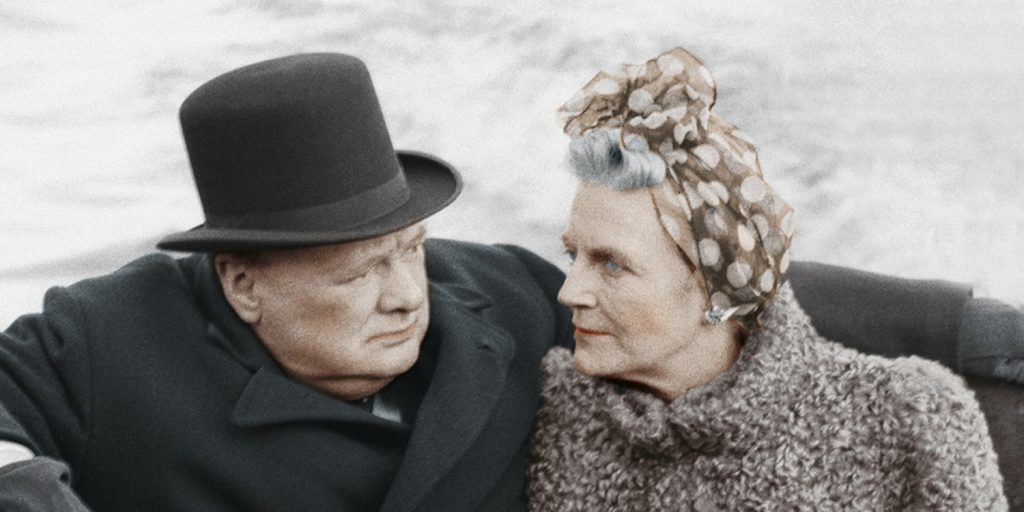
Behind Winston Churchill’s public life stood a woman of extraordinary judgment, resilience, and moral courage. Clementine Churchill was not merely a supportive wife standing quietly in the background. She was a mother, political partner, trusted advisor, charitable leader, wartime ambassador, and, at times, one of the few people willing to challenge Winston Churchill directly.
Clementine’s own life was marked by hardship long before she entered Churchill’s world. She grew up amid instability, financial strain, social judgment, and personal loss. Yet those early struggles helped form the steel that would define her adult life. She educated herself, resisted expectations that women should remain ornamental, and built an identity rooted in intelligence, independence, and conviction.
Clementine and Winston married in 1908 and built a partnership that endured through political defeat, financial strain, war, triumph, and grief. Their family life was marked by deep affection, but also by sacrifice. As the mother of five children, Clementine carried much of the emotional weight of family life while Winston’s public responsibilities consumed him. Their daughter Marigold died in childhood, a devastating loss that shaped the family profoundly. Yet Clementine remained a steadying presence, helping hold together a household that was never separate from history.
Her role in Churchill’s career was equally significant. Clementine supported, advised, and challenged him throughout his political life, and their correspondence reveals a marriage of affection but also candor. She was one of Churchill’s closest confidantes and companions, offering support when he was isolated, encouragement when he was under attack, and honest criticism when she believed he needed correction. She understood people, politics, and power, and she often saw dangers and possibilities that others missed.
During the Second World War, Clementine stepped into a major public role of her own. She chaired the Red Cross Aid to Russia Fund, launched in October 1941, which raised more than £1 million by Christmas and ultimately reached £7.5 million by June 1947. The fund provided medical aid and other support to the Soviet people at a time when the Eastern Front was absorbing immense suffering and sacrifice.
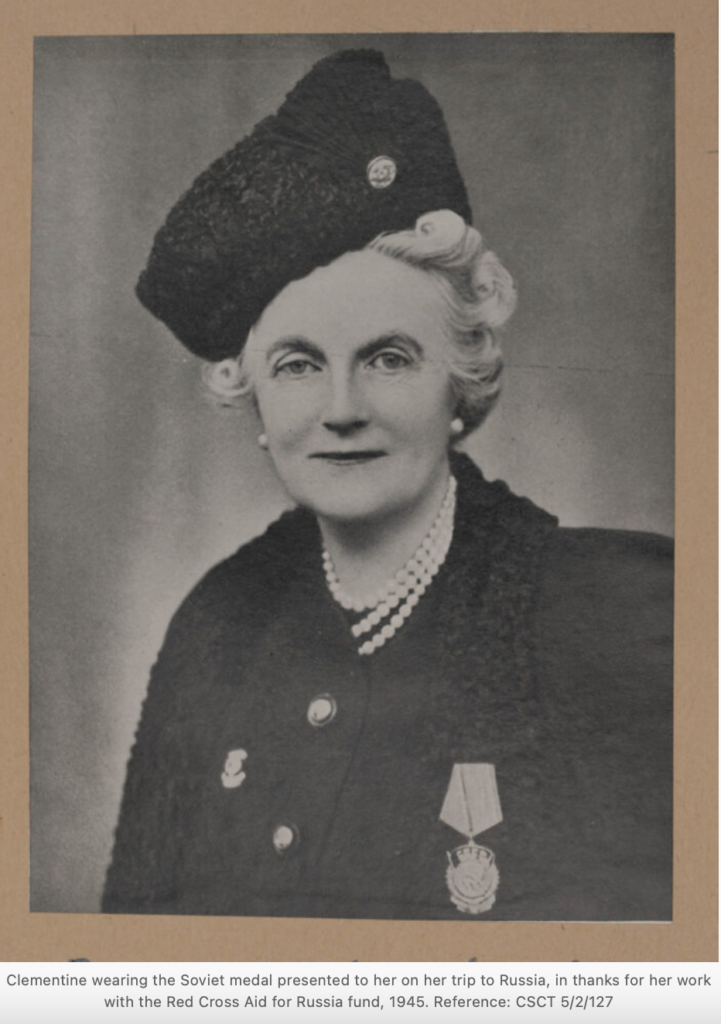
Her leadership was not symbolic. Clementine mobilized donors, workers, civic groups, and public events to support the campaign. She later visited the Soviet Union as part of this work, carrying humanitarian concern into one of the most dangerous and politically complex settings of the war. Her wartime service reflected a broader pattern in her life: she lent her name, energy, and organizational ability to causes that addressed human need beyond politics.
Clementine Churchill matters because she reminds us that leadership is rarely solitary.
Churchill’s achievements were his own, but the life that made them possible was sustained by partnership, family, sacrifice, correction, and care. Clementine’s influence was not always visible from the podium or the dispatch box, but it was deeply felt in private counsel, public service, and wartime resolve.
To remember Clementine is to widen our understanding of Churchill himself. His story is not only one of speeches, strategy, and statesmanship. It is also a story of family, resilience, and the people who helped him carry the burdens of leadership. Clementine Churchill was one of the most important of them.
Clementine’s story speaks to partnership, resilience, duty, independence, and the often-unseen labor that sustains leadership in moments of crisis. That is why her life belongs on screen, not as a footnote, but as a story in its own right.
That is why a new dramatic telling of Clementine’s life feels so timely. The planned limited series written by award winning writer Margaret Nagle & produced by Maven Screen Media, Clementine, seeks to bring forward a figure whom history has too often left in the margins. Clementine Churchill was a deeply modern heroine who risked everything to save her country from the hands of Nazism, the world from fascism, and her husband from himself.
As noted by the series writer and Emmy winning screenwriter Margaret Nagle, Clementine Churchill’s story is a piece of history we assume we know, but we don’t.
“Clementine Churchill’s contribution to the survival of England and Western Democracy alongside her husband is remarkable in its own right yet remains untold.
Young Clementine Churchill endured a childhood of chronic financial instability, even fishing coins out of fountains to feed her hungry siblings. She bucked every societal expectation when young women were supposed to be ornamental – she overcame poverty by working two jobs, educated herself, refused to be seen simply for her exceptional beauty, and married for love in a union that surprised everyone. She was, from a very young age, ahead of her time. She pushed her husband to use his brilliance and influence to stop the spread of fascism, used her own brilliance to win over diplomats, and acquired aid that, in the early days of WWII, England would not have survived without. She then raised millions to feed starving children in Russia, and was invited to come face-to-face with Stalin himself.
Clementine Churchill was in the room where it happened, and accomplished so much all on her own. We want to bring the story of Clementine Churchill into the light with an unforgettable mini-series that honours her legacy.”
People who knew Winston Churchill often said that he was lucky to have married Clementine. The more we learn of her story, the clearer it becomes that he was not the only one who was fortunate. Britain was fortunate. The world was fortunate. And history is richer when Clementine Churchill is finally seen not as a figure beside greatness, but as a force within it.






Subscribe
WANT MORE?
Get the Churchill Bulletin delivered to your inbox once a month.