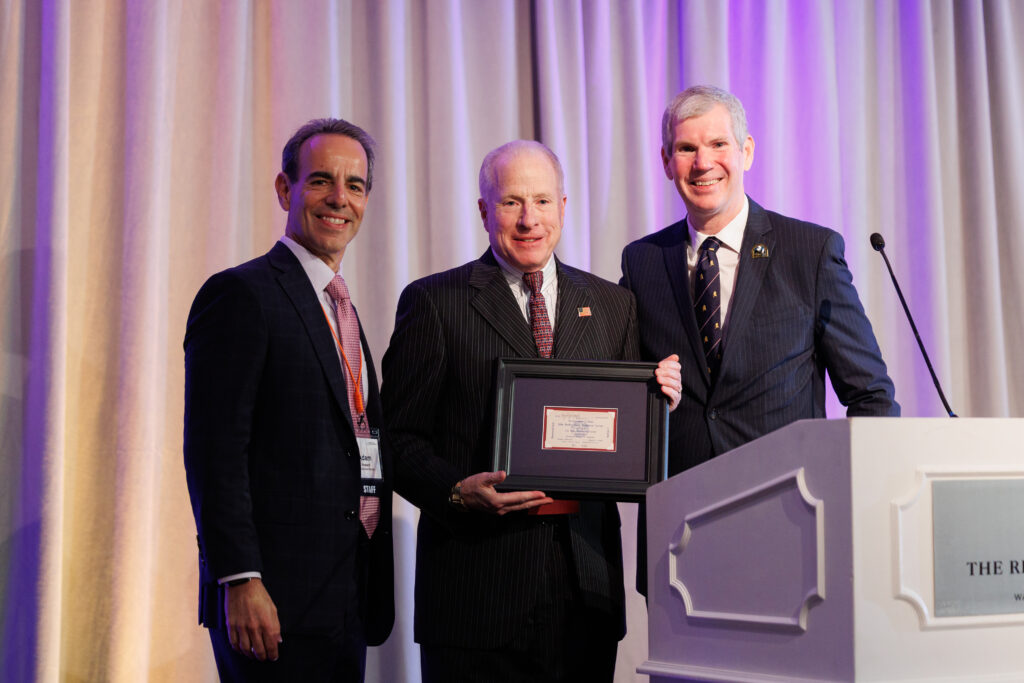
The Hottest Ticket in Town, 1946 By Donald P. Lofe, Jr. President and Chief Transformation Officer and Churchill Fellow, Westminster CollegeDirector, International Churchill Societ...
In 1900, most Londoners ate their meals at home. Most working men returned home for their midday meal and those who didn’t ate plain British food in plain British ‘chophouses’. Wealthy men dined out at their clubs or, if they were very adventurous, at French restaurants. During the Second World War, restaurants were initially exempt from rationing; the wealthy were supplementing their rations by eating ‘luxury’ off-ration food. This was strongly resented by those unable to afford to eat out; new restrictions were introduced in May 1942 so that restaurants weren’t able to charge more than five shillings per customer and meals couldn’t be more than three courses (and only one of these could contain meat or fish or poultry). But even restaurants couldn't always offer escape from the monotony of potatoes, oats and cabbage: in 1944 Simpson's-in-the-Strand was serving Creamed Spam Casserole.
A collection of lesser-seen video clips showing Winston Churchill addressing the public.
By the time Churchill was facing another World War, in 1939, he understood more readily that while risks had to be taken, a balance needed to be struck between caution and ‘over-daring’. As Prime Minister, he walked the narrow road between the ‘precipices’ on either side; he needed nerves of steel to keep Britain and the Allies on the path to victory.
During the war, Churchill had one great asset that Hitler seemingly lacked; a brilliant team of crypto-analysts at the Government Communications HQ at Bletchley Park, Buckinghamshire. The deciphered radio intercepts known as Ultra far outclassed anything the Germans achieved. It remained one of the most closely guarded secrets of the war.
With his usual energy and vigour, Churchill threw himself into all aspects of war policy and direction. As the British people waited for air assaults and land battles – a lull in the action known as the ‘phoney war’ – the Navy, for which Churchill was responsible, had initial success on the sea against the ‘pocket battleships’ of the Germans. In this November 12 broadcast speech, Churchill is in aggressive mood. He taunts the ‘boastful and bullying’ Nazis, led by ‘that evil man’, Hitler. In a sarcasm-laden speech, he attacks Goring and Hitler in particular, highlighting what would happen should Britain be conquered – ‘all will be enslaved’. Prophetically, he says that the ‘frenzy of a cornered maniac could drive Herr Hitler into his worst crimes’. The invasion of Denmark and Norway by German forces on 9 April 1940, and the disastrous defence of Norway by the British and their retreat, exposed the inability of the government to manage the war. Rather than weakening Churchill’s position as First Lord of the Admiralty (as similar events had in Gallipoli during the First World War), the failure of the Norway campaign in fact strengthened it. The public felt that Chamberlain was not the man to lead them in war.
The summer of 1940 was, as Churchill called it, Britain’s ‘finest hour’. It was also his. When the German armies conquered France, Britain found itself in the line of attack. With German U-boats patrolling the seas and soon to have bases on the Atlantic, and German bombers marshalling on the coast of France, Britain faced its first serious threat of invasion since 1805. The months of June, July, August and September were to prove Churchill’s moment of ‘Destiny’. For more background information, see the Imperial War Museum’s material on 1940 . Many found it difficult to see how Britain could avoid being defeated. Victory seemed impossible. But Churchill was passionately opposed to negotiating with Hitler. The War Cabinet did consider a compromise peace – or at least the offer of mediation, by Italy, between Germany and the allies – but Churchill argued strongly against this. He was convinced that Hitler would renege on any promises or agreement, just as he had done back in 1938. Churchill used words to persuade his country to fight on. He was a great political communicator – he had refined his speechmaking over many years – and his speeches made at this time (most of them in parliament, with some broadcast later on the radio) ‘mobilized the English language and sent it into battle’.
On 18 June, Churchill warned the British people that the ‘battle of France’ was over and the ‘battle of Britain’ was about to begin. His words were proved right. As early summer gave way to July and August, the threat of invasion loomed over Britain. Churchill, seeing that control of the skies was vital, put businessman Lord Beaverbrook in charge of Aircraft Production (as Minister) and encouraged British scientists to improve radar defences and counter German technology. In August, the Royal Air Force managed to inflict heavy casualties on the German and, in September, the German pilots transferred their attention from the coastal airfields and those in south-west England to London, allowing the fighter bases respite from attack but putting British people in the city at much greater risk. In early September a massive series of raids involving nearly four hundred German bombers and more than six hundred fighters targeted docks in London’s East End almost continuously, day and night. Listen to a reporter describing London in the Blitz, with St Paul’s Cathedral, its dome silhouetted against the ‘ruddy sky … almost like the Day of Judgement’. For more on the Battle of Britain, see the BBC collection in their online Archive of programmes and documents (including interviews from some of the battle’s heroes and film footage of the Spitfire and Hawker Hurricane fighter planes in action), . The turning point in Britain’s fortunes in the war was captured by Churchill’s famous speech in praise of the British men of the under-resourced Royal Air Force. But more was still to come.
After failing to defeat the RAF in the Battle of Britain, the turned to night bombing raids against London and other British cities. The ‘Blitz’, as it became known, aimed to disrupt production and break morale. London was the main target and suffered the heaviest bombing but, by the end of the war, there was hardly a large city or town in Britain that had not come under attack. As the winter wore on, the air raids became heavier. But the repeated heavy raids would not crush the morale of the British people. The ‘Blitz’ spirit kept them going. And Churchill played his part in keeping up morale. He made sure he was frequently in the public eye, constantly travelling around the country, visiting ammunition factories, shipyards, the troops.
All the Churchills supported their father. The children, to varying degrees, served him – and their country – in the Second World War, too. Diana served in the Women’s Royal Naval Service (WRNS), Sarah with the Photographic Interpretation Unit of the Women’s Auxiliary Air Force (WAAF) and Mary served in the armed forces in mixed anti-aircraft (AA) batteries with the Auxiliary Territorial Service (ATS). Mary also attended the Quebec conference of 1943 as an aide to her father, while Sarah played a similar role at Teheran in 1943 and Yalta in 1945. Randolph served as an Intelligence Officer in the Middle East, was attached to the newly formed Special Air Service (SAS), and undertook missions in the Libyan desert and in Yugoslavia.
Get the Churchill Bulletin delivered to your inbox once a month.
Join the International Churchill Society today! Membership starts at just $29/year.