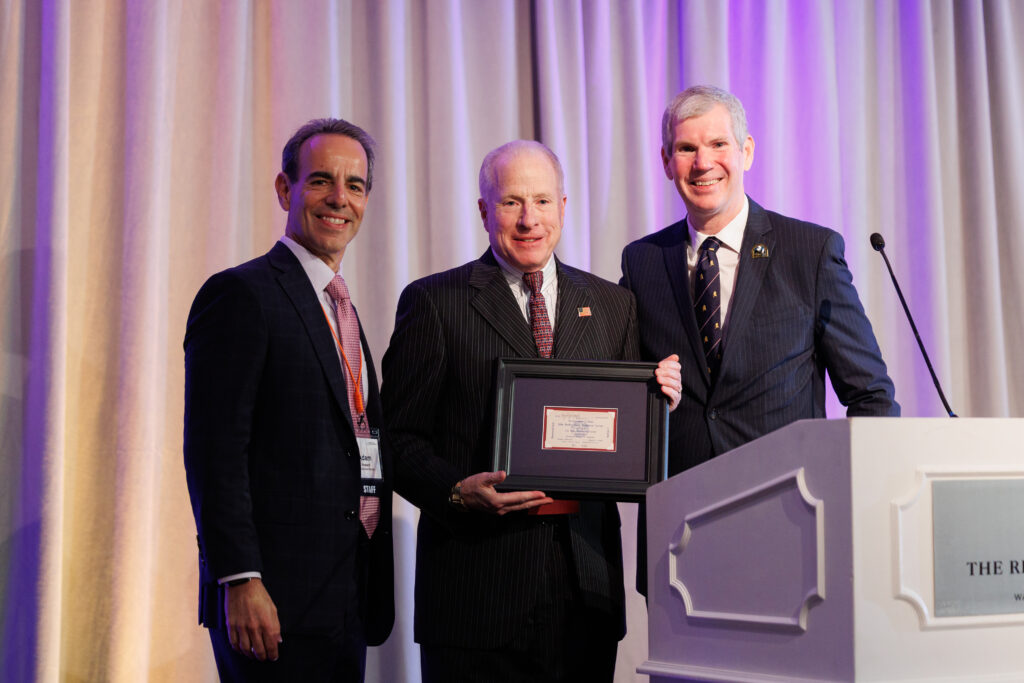
The Hottest Ticket in Town, 1946 By Donald P. Lofe, Jr. President and Chief Transformation Officer and Churchill Fellow, Westminster CollegeDirector, International Churchill Societ...
The train was romanticised in countless works of art These include the poem ‘This is the Night Mail’ by WH Auden, which demonstrates that the rail network was not only used...
Originally published in six volumes in the US, with the ensuing English edition making corrections and adding a few maps, The Second World War was Churchill’s account of the War from...
By his twenty-fifth birthday, in November 1899, Churchill had published two books based on his newspaper assignments (The Story of the Malakand Field Force and The River War), had a novel...
The American novelist was, in fact, famous earlier and much better known than his British counterpart; his novel Richard Carvel (1899) sold around two million copies Later novels, The...
Shortly after his return from Fulton in 1946, Churchill began to write his war memoirs. With a team of researchers beavering away on his behalf, he had a very ordered (if somewhat laborious) approach to drafting and editing. He would pull together all his documents (or get his researchers to pull them together) – minutes, telegrams, letters – and then would track down material from other sources, too. Churchill would then begin to draft the text which would link all the documents together, dictating to a team of secretaries, often late into the night. Just as he did with all his speeches, he’d check drafts, check proofs, marking them up at each stage with copious corrections, determined to get the right word, the right phrase. Despite such a laborious process (or perhaps because of it), appeared relatively quickly, in six volumes, between 1948 and 1954. Churchill never claimed the memoirs were ‘history’; they were rather a contribution to history. Although their very breadth and coverage gave the impression that they were a definitive account, there were omissions, of course. was Churchill’s interpretation of the events, the work of a man seeking to place his role in the war – and in history. The books sold well, with a combined first printing of over 800,000 copies.
Shortly after his return from Fulton, Churchill began to write his war memoirs. With a team of researchers working on his behalf, and a very ordered (if somewhat laborious) approach to drafting and editing, he soon had the first volume finished. appeared in six volumes between 1948 and 1954. Churchill never claimed the memoirs were ‘history’; they were rather a contribution to history. Although their very breadth and coverage gave the impression that they were a definitive account, there were omissions, of course. was Churchill’s interpretation of the events, the work of a man seeking to place his role in the war – and in history. The books sold well, with a combined first printing of over 800,000 copies.
During these ‘wilderness years’, Churchill embarked on a series of books, for which he was offered – and paid – considerable advances, helping to swell the coffers (rapidly absorbed by improvement work on Chartwell). Shortly after leaving office he began his biography of his illustrious ancestor, the first Duke of Marlborough which was published in four volumes between 1933 and 1938.
Churchill enjoyed a strong friendship with T. E. Lawrence, also known as Lawrence of Arabia, and was left devastated by his death in 1935. Dr. Warren Dockter offers seven interesting facts about their relationship.
Churchill had an incredibly quick mind, a sharp tongue and a very large vocabulary. He loved playing with words – creating new ones, adapting old ones – and using words to his advantage, quite often at the expense of others (although sometimes at his own, too!) Many of his speeches – and quotes from those speeches – are very well known, but his witticisms, , jokes and puns are perhaps less well recorded (or often misattributed). Churchill had a mischievous sense of wit. This couldn’t really be called ‘humour’; he wasn’t usually trying to be funny or make people laugh; nor did he tell bawdy or ribald jokes; this wasn’t in his nature. But he did enjoy the neatness and cleverness of a well-placed and carefully judged retort. He didn’t hesitate to use his particular talent with words on others. He had certain ‘sparring partners’ (as Richard Langworth puts it) who prompted him to fire off a quick riposte. Although these might have seemed off the cuff and spontaneous, they were generally carefully rehearsed, words carefully selected for punning potential, stored in his prodigious memory and then released on their unsuspecting recipient at the right moment. In 2013, he topped a poll of ‘history’s funniest insults’. Read more – and see the full list – . In the there’s a Churchill quote on nearly every page. As this journalist said, he’s the last word in political wit.
Get the Churchill Bulletin delivered to your inbox once a month.
Join the International Churchill Society today! Membership starts at just $29/year.