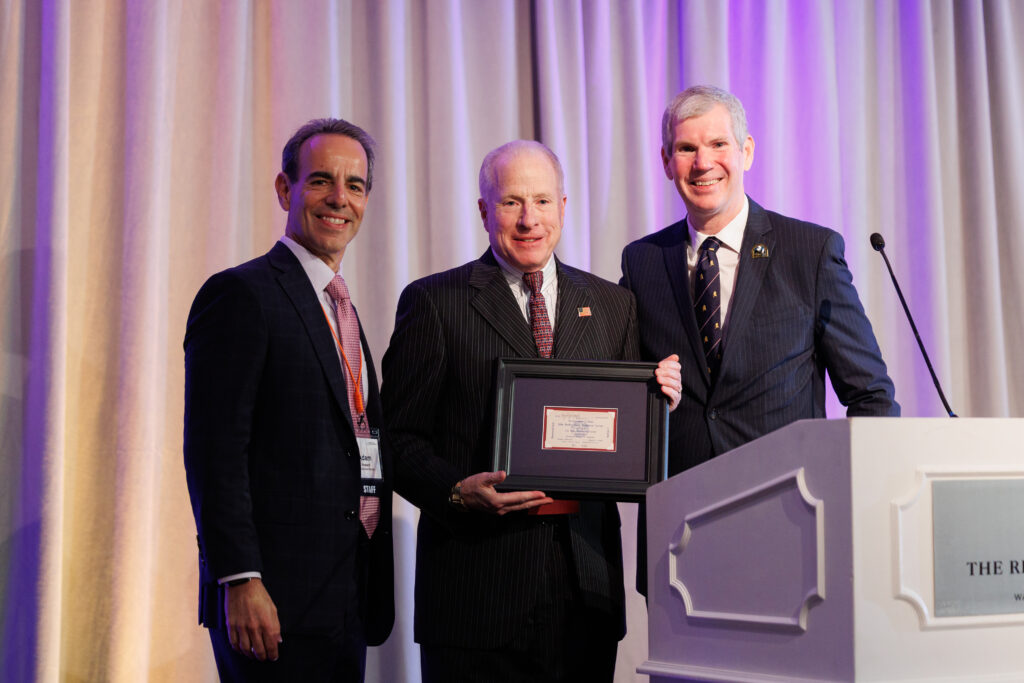
The Hottest Ticket in Town, 1946 By Donald P. Lofe, Jr. President and Chief Transformation Officer and Churchill Fellow, Westminster CollegeDirector, International Churchill Societ...
While ‘the man of action’ perhaps more accurately describes Churchill in time of battle, demanding action from others and of himself, he was always a restless man, fearful of inaction. In his quieter years, he was always determined to keep himself busy (perhaps to keep the ‘black dog’ of depression at bay). Although his favourite pastime was painting, he continued to travel, ride and swim, as well as write books during his ‘wilderness years’ – he only gave up playing polo when he was fifty-two – and into his sixties and seventies. Even when elderly, after the Second World War, he continued to travel (to the US, to give lectures and speeches, to Europe for holidays). Despite having suffered heart attacks, strokes and pneumonia, he was far more active – and physically resilient – than most his age.
Music halls were a popular form of entertainment in the late nineteenth century, up until the middle of the twentieth century. These halls were often joined to taverns so that customers – usually young dandies and the working classes – could eat, drink and enjoy the performances. They were considered rowdy, vulgar and debauched places by many of the middle- and upper-classes. Music hall performers, who adopted stereotypical characters and sang comic songs about working class life, might be seen as prototypes of today’s celebrity actors, singers and comedians.
Churchill took up painting in 1915 at the age of forty after his sudden fall from office over the disastrous Dardanelles campaign. He hoped it would provide a distraction, and he threw himself into it wholeheartedly.
While the 1950s were overshadowed by depression that followed the devastation of the Second World War, the ‘swinging 60s’ were a decade of protest, revolution and progression. Increased immigration to the UK brought ethnic diversity, while the voices of marginalised social groups such as women, the working class and young people made themselves heard. There was a perceived generational gap between the behaviour and beliefs of young people – who, for example, wore Mary Quant skirts, listened to pop music, read provocative books like and protested against the Vietnam War – and older generations who wanted to preserve their conservative values. While this might seem to be something of a cliché, many aspects do chime with reality and represent the distinctiveness of the 1960s.
Breakfast cereals, self-raising flour, yeast, baking powder, jelly, custard powder, lentils, pickles, margarine and dried vegetables were all 'invented' during the twentieth century.
Film footage of the Churchill’s enjoying a rare family holiday in the 1940s, possibly in Marrakech, during the Second World War https://wwwyoutubecom/embed/jf62-rocFd4 copyright: British Pathé...
‘So much of him still lives in his paintings at Chartwell’ – so says the narrator of this 1968 documentary, which shows some of the paintings on display at Churchill’s...
Demonstration by Miss Barbara Miles and Mr Maxwell Stewart, Winners of World’s Dancing Championship 1925 https://wwwyoutubecom/embed/JhRkXBciRNE copyright: British Pathé...
Only a week after his last cabinet meeting, Churchill and Clemmie went on holiday to Syracuse Here you can see a film clip of their visit https://wwwyoutubecom/embed/0U7tgmaqnmg copyright: British...
Get the Churchill Bulletin delivered to your inbox once a month.
Join the International Churchill Society today! Membership starts at just $29/year.