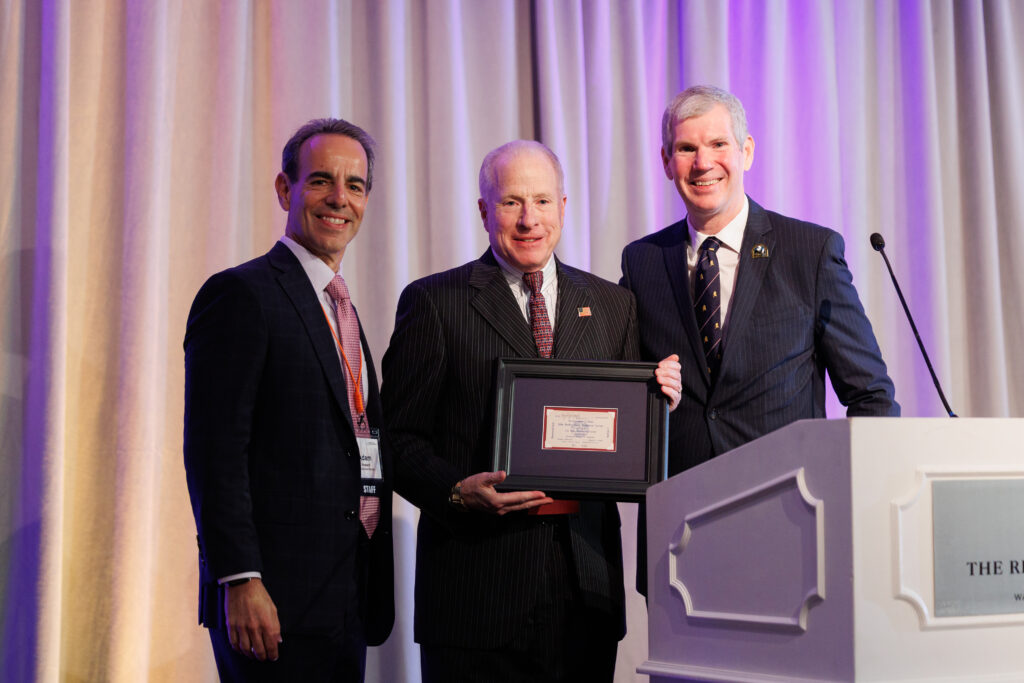
The Hottest Ticket in Town, 1946 By Donald P. Lofe, Jr. President and Chief Transformation Officer and Churchill Fellow, Westminster CollegeDirector, International Churchill Societ...
Before too long, rather than playing with his nephew’s watercolour paint-box, Churchill was tackling oil painting. On learning of Churchill’s experimentation and enthusiasm a near neighbour, Sir John Lavery, the renowned Anglo-Irish and official First World War artist, together with his talented artist wife Hazel, gave practical advice and help and encouraged this new hobby. Later in 1915, Churchill was often to be found working in Lavery’s studio in London, not far from the house Churchill and his brother Jack were sharing, with their families, on Cromwell Road. Churchill was to take his paints with him wherever he travelled – at home and abroad – throughout this life. Enthralled with his new hobby, he painted during the First World War while at the Western Front in early 1916 (as a Lieutenant-Colonel with the 6th Battalion Royal Scots Fusiliers), at ‘Plug Street’ (Ploegsteert) in Flanders. On his return from the First World War and during the 1920s, even when embroiled again in political life, Churchill continued to paint. In fact, painting intensified as a pleasure and it was at this time that he wrote two articles about it, praising the enormous rewards to be gained from painting as a pastime.
In 1900, most Londoners ate their meals at home. Most working men returned home for their midday meal and those who didn’t ate plain British food in plain British ‘chophouses’. Wealthy men dined out at their clubs or, if they were very adventurous, at French restaurants. During the Second World War, restaurants were initially exempt from rationing; the wealthy were supplementing their rations by eating ‘luxury’ off-ration food. This was strongly resented by those unable to afford to eat out; new restrictions were introduced in May 1942 so that restaurants weren’t able to charge more than five shillings per customer and meals couldn’t be more than three courses (and only one of these could contain meat or fish or poultry). But even restaurants couldn't always offer escape from the monotony of potatoes, oats and cabbage: in 1944 Simpson's-in-the-Strand was serving Creamed Spam Casserole.
When war broke out many sports cancelled all fixtures. The Football League, however, continued as normal throughout the 1914–15 season. There are also various accounts which record British and German troops playing football during the 1914 Christmas Truce. It’s also said that on 1 July 1916, men of the East Surrey Regiment, encouraged by Captain ‘Billie’ Nevill, went ‘over the top’ kicking footballs. During the First World War sport helped to keep people fit and to distract them from the events which were going on around them. To hear more about this listen to on Sport in War from the Imperial War Museum. Click to find out more about how Britain thought football could help to win the war.
In 1917, when Germany began sinking ships that were bringing food (and military equipment) to Britain, and the country had just six weeks' food left, the Government initiated the rationing of food supplies. Even after the end of the war, sugar and butter remained rationed until 1920. Bread was subsidized but in 1917, British people were told to eat twenty five per cent less. Even the fighting troops had their food rationed. Compare . The US faced similar issues during the First World War. The country was in a severe economic depression, with many living in poverty, and .
After a few weeks as a Major with the 2nd Battalion, Grenadier Guards, in January 1916 he was appointed Lieutenant-Colonel, commanding the 6th Battalion, Royal Scots Fusiliers on the Western Front.
The onset of the First World War in August 1914 thrust Churchill into the limelight again, but this time at centre stage in an international crisis. For a ‘man of action’, this was the place to be. Eager to emulate the deeds of his ancestor, the Duke of Marlborough, Churchill felt anticipation and excitement – and the promise of glories to come – as the prospect of war became unavoidable. As First Lord of the Admiralty,Churchill issued the order to the Navy to act – to ‘commence hostilities’. The First World War was to be a time of great personal challenge for Churchill; it was to demand personal bravery and resilience in the face of both physical danger and intense mental battles. He did indeed ‘put his head into the lion’s mouth’.
The First World War was to provide the first major setback to Churchill’s political career. In December 1914, at the age of forty, Churchill was eager not just to run the Navy but to manage the war itself. Demonstrating his usual self-confidence, drive and determination, Churchill looked for creative ways to engage the enemy, including an attack on the Dardanelles Straits. The high-risk offensive operation went ahead. It soon became clear that the planning of the operation was beyond the capabilities of the British leaders.
During the Second World War, Churchill had little red labels attached to important documents with the words ‘Action This Day’. It was one of the many ways in which he sought to drive and enthuse those around him. In this section you’ll learn more about Churchill’s lifelong desire to be at the centre of the action.
Churchill took up painting in 1915 at the age of forty after his sudden fall from office over the disastrous Dardanelles campaign. He hoped it would provide a distraction, and he threw himself into it wholeheartedly.
Get the Churchill Bulletin delivered to your inbox once a month.
Join the International Churchill Society today! Membership starts at just $29/year.