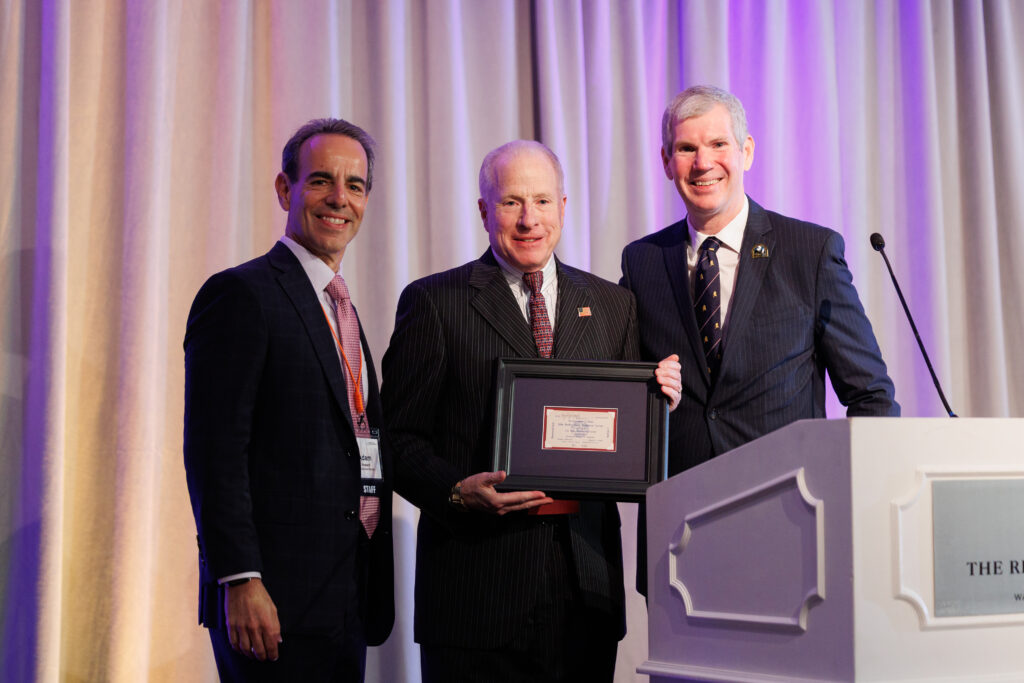
The Hottest Ticket in Town, 1946 By Donald P. Lofe, Jr. President and Chief Transformation Officer and Churchill Fellow, Westminster CollegeDirector, International Churchill Societ...
Although it seemed unlikely that Churchill, who had led Britain to victory, could lose, he didn’t help his cause His broadcasts seemed ill-judged and out of touch with the swing in...
Introduced by Richard M Langworth...
On 18 June 1940, Churchill gave a rousing speech to the British people, announcing: '... the Battle of France is over. The Battle of Britain is about to begin.' Four days later, France surrendered to Germany and Hitler turned his attention to Britain.
On 24 August, German night bombers aiming for the airfields accidentally destroyed several London homes, killing civilians. Churchill retaliated immediately by bombing Berlin the following night. Starting on 7 September 1940, London was bombed by the for 57 consecutive nights, and other British cities were targeted. But a real turning point in Britain’s fortunes in the war occurred on 15 September. In an attempt to shatter British morale, now that an invasion began to seem increasingly unrealistic, Hitler sent two enormous waves of German bombers. But their attacks were scattered by the RAF; the German defeat caused Hitler to order, two days later, the postponement of preparations for the invasion. In the face of mounting losses of men and aircraft, the switched from daylight to night-time bombing and although fighting continued in the air for several more weeks, and British cities continued to be bombed, German tactics to achieve air superiority ahead of an invasion had failed.
After Germany’s surrender in May 1945, Churchill wanted his wartime coalition government to continue until the defeat of Japan which wasn’t anticipated for another year at least. But Labour and the majority of the Liberals refused and pulled out of the coalition. Churchill headed a Conservative ‘caretaker’ government for a brief period until Parliament was dissolved and the first general election for ten years was held.
Those who had felt Churchill’s career had reached its limit when the Conservatives were defeated in 1929 now felt vindicated. Even some of his own party thought Churchill was out of date and out of touch. Rather than weakening Baldwin’s position (as leader), as some thought he’d intended, Churchill – by endeavouring to ‘marshal British opinion’ for a lost cause – in fact weakened his own position. When Baldwin and MacDonald joined forces to form a National Government in 1931, bringing together leading figures from the Conservative, Labour and Liberal parties, Churchill’s views on India meant he was excluded from office. With his standing and credibility seriously damaged, this ‘personal crusade without restraint or care for the consequences’ (Ball, ) meant his later warnings about the dangers of Nazism went largely unheeded. Finding himself increasingly isolated politically, with seemingly little influence, Churchill had time on his hands. He also needed a steady income. Chartwell was an expensive home to run – and he had four children and a wife to support, as well as his ever-lavish lifestyle . He turned his attentions, and prodigious energies, elsewhere.
In 1917, when Germany began sinking ships that were bringing food (and military equipment) to Britain, and the country had just six weeks' food left, the Government initiated the rationing of food supplies. Even after the end of the war, sugar and butter remained rationed until 1920. Bread was subsidized but in 1917, British people were told to eat twenty five per cent less. Even the fighting troops had their food rationed. Compare . The US faced similar issues during the First World War. The country was in a severe economic depression, with many living in poverty, and .
At the start of the twentieth century, there was great variety in the types of food that was available to the rich and the poor. Malnutrition was common amongst poorer families, while elaborate dining was commonplace for the wealthy. This all changed after First World War and, by the Second World War, the food that we ate had changed forever.
V H Mottram’s (1932) gives recipes to help families economise: For the “really poor”, ingredients include white and brown bread, suet white flour, rice, tapioca, sago, potatoes, dates, currants and figs. For the “merely poor”: butter, parsnips, raisins, milk, sweet biscuits, some pork and beef. Those on a ‘moderate income’ could turn to (1937), with twelve menus for breakfasts, luncheons and dinners for all four seasons. Recipes included salmon mayonnaise, roast fowl, asparagus with cream sauce, oysters , fillets of Beef a la St Aubyn, roast partridge and all kinds of fish – fresh, saltwater and shellfish.
Get the Churchill Bulletin delivered to your inbox once a month.
Join the International Churchill Society today! Membership starts at just $29/year.